


Your calendar reveals you as a leader
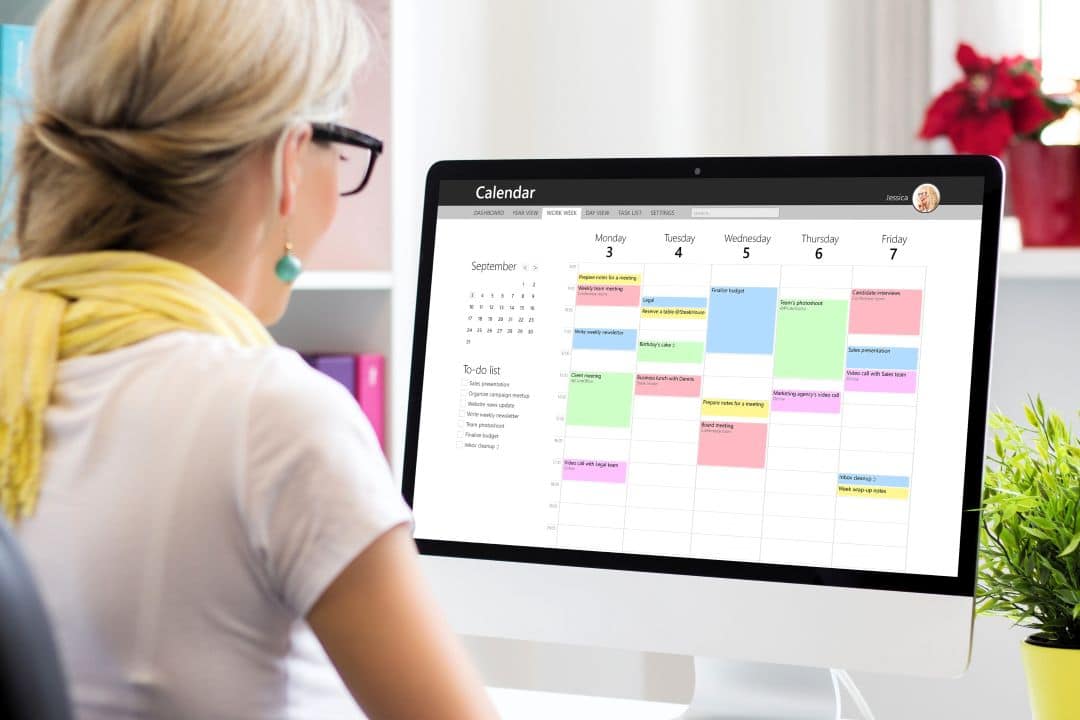
We often talk about leadership in big words: strategy, direction and ambition. But in practice, it’s rarely the strategy documents that reveal the most about your leadership. Your calendar does.
Your calendar tells what actually gets space. What is prioritized and what must constantly give way. It tells you how to balance focus, decisions, availability and pace. In short: It shows how your leadership unfolds in everyday life.
Unfortunately, for many of the managers we meet, the calendar is more reminiscent of a packed booking system than a personal planning tool. Everything is booked, nothing is flexible – and the tool that should create an overview ends up controlling the working day instead of supporting it.
But the calendar can work differently – as an active management tool!
Six planning steps to strengthen your leadership
1. Prioritise what’s important – before the loud
If everything is important to you, nothing is important. Use the calendar to consciously protect the activities that have the greatest impact on direction, quality and people – even if they don’t shout the loudest. It takes courage to choose on and off – but this is exactly where your leadership shows.
2. Weekly planning as a management discipline
Ending your week with a review of the calendar can give you peace and overview. What should be weighted in the coming week? Where should your focus be? How do you find time? When your next week starts with a clear plan, you reduce firefighting – and make better choices.
3. Create space for thinking and preparation
Time for reflection should not be a luxury, because it is the foundation for good and qualified decisions. When your calendar only leaves space for meetings and specific deliverables, you all too easily lose the overview. If you prioritise reflection breaks, you strengthen both quality and impact.
4. Plan energy – not just activities
Your calendar should support your energy level so that you don’t have to perform best when you’re running on the reserve tank. A concrete approach is to set aside time in the morning (when most people perform best) for the most demanding tasks – and to place important activities where you are sharpest.
5. Transparency with balance
Leadership is also about presence, so your calendar should not signal busyness, but that you prioritize both your tasks and your availability. So find the balance and clearly mark when you have focus time – and when your “door” is open. This is crucial if you want to strengthen dialogue and trust.
6. Meetings with clear intention
For most managers, meetings take up (too) much space – so every meeting must have a purpose, a desired result and a clear group of participants. When it is clear why you have to meet, it also becomes clearer whether a meeting should be held at all – or if time can be better spent elsewhere.
Time is not just time – it is a signal
The way you spend your time quickly becomes a norm for the rest of the organization. A calendar without air can create a culture where pace trumps quality, and where no one really has time to think, listen or be present.
Leadership is exercised not only in the meeting room, but through every single “yes” and “no” in the calendar. So the next time you open it, you might want to ask yourself: Does my calendar support the leadership I want to be responsible for – or has it taken control?
A friendly but firm call from here: Just go through a single week in your calendar. Is there a balance between communication, reflection, execution and accessibility? And are your priorities aligned with your goals?
Small adjustments often make a bigger difference than you think. And once the effect is felt, the road to new work habits is surprisingly short.
If you need help getting started, we are – of course – ready.
Our job is to make you better at yours!